

Making the Moment
Blog by: Yogi Castor - BTS Photos by: K.S. Brooks
Madame ou Monsieur is a quiet story about loneliness, connection, and the small ways joy can find its way back into someone’s life. It is not a film built around large dramatic reveals or loud emotional moments. Instead, it lives in stillness, handwritten letters, soft light, and the small gestures that begin to shift a person’s world.
That meant the production had to be approached with the same kind of care. I wanted the film to feel intentional, but not overly designed. Every frame, prop, light, and camera placement needed to support the emotional tone without pulling attention away from the story.
The film asks the audience to slow down and notice what Vincent is noticing. Because of that, the behind-the-scenes process became about creating space for those moments to feel honest.

One of the central ideas in Madame ou Monsieur is the act of noticing. Vincent’s life does not change all at once. He does not suddenly become someone new. His world opens slowly, through small reminders that beauty and connection are still possible.
That is why details like the chandelier stood out to me. It was not just a piece of set dressing or something interesting in the background. It became a small visual reminder of what the film is reaching toward: finding joy in places that might otherwise be overlooked.
There is something meaningful about a simple light source in a quiet room. It can make a space feel warmer, softer, and more alive. For a story about a character learning to reconnect with the world around him, those small visual details carried a lot of weight.
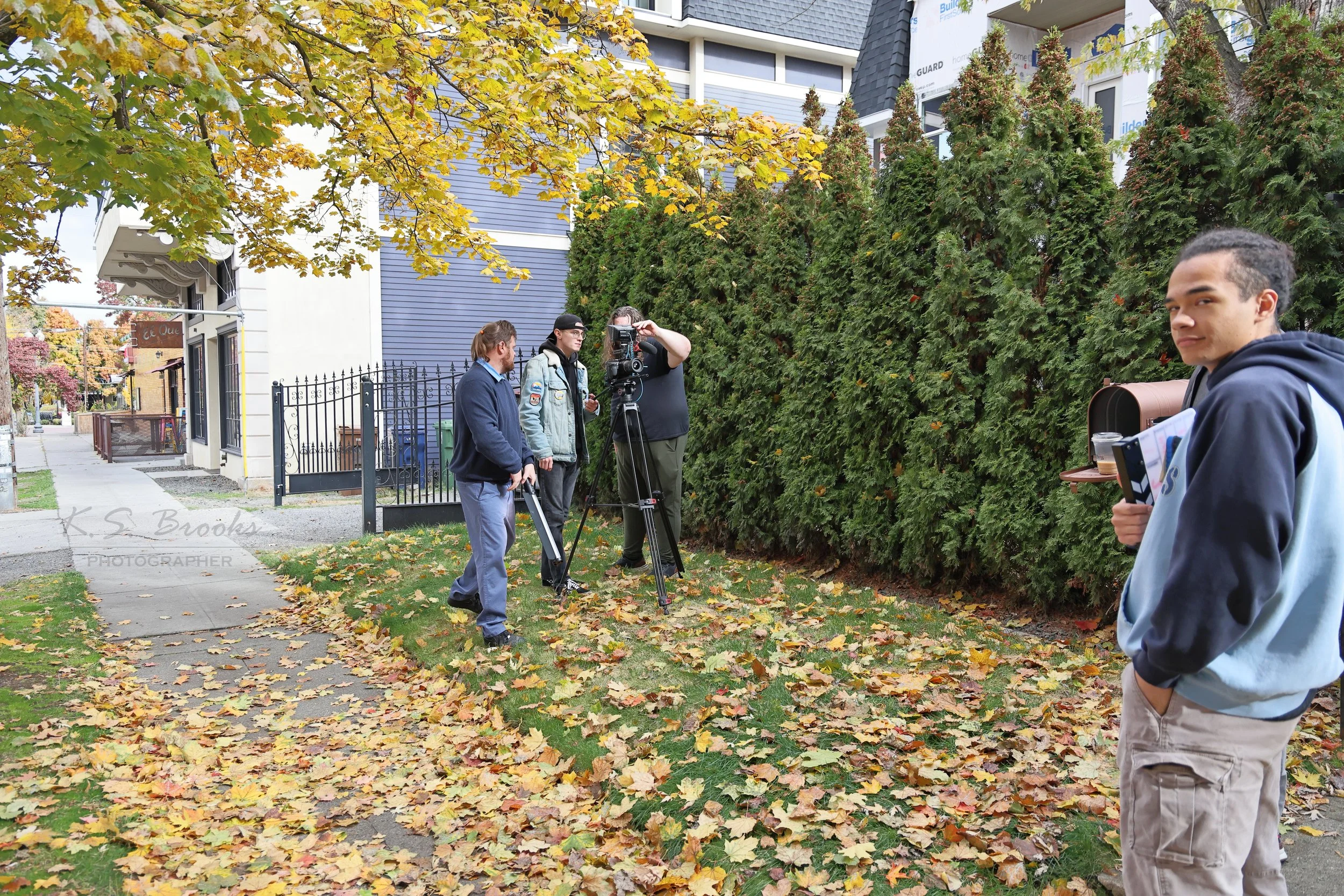
Directing this film meant paying close attention to what each shot was saying emotionally. A small camera adjustment can completely change the feeling of a scene. The amount of space around a character, the angle of a frame, or the placement of a background detail can shift how the audience understands a moment.
For Madame ou Monsieur, I did not want the camera to feel like it was forcing emotion onto the viewer. I wanted the images to feel patient. The goal was to let the audience sit with Vincent rather than push them toward a specific reaction too quickly.
Working with the camera operator was a big part of that process. Sometimes directing is not about giving a huge speech or making a dramatic change. Sometimes it is standing beside the camera, looking at the frame, and adjusting one small thing until the shot begins to feel right.

A lot of filmmaking happens before the camera ever rolls. Gear has to be packed, batteries need to be charged, media needs to be ready, and the day has to be thought through as clearly as possible.
My background as a chef and prep cook has shaped the way I approach production. In a kitchen, you do not wait until service starts to figure out where everything is. You prep ahead, organize your tools, and create a system so you can focus when the pressure hits.
Film sets feel very similar to me. The night before a shoot matters. Staging cameras, organizing totes, checking equipment, charging batteries, and preparing the space all help reduce chaos once people arrive. Preparation does not remove every problem, but it gives you a better chance of solving them calmly.
That preparation also gives the creative work more room to breathe. When the basics are handled, there is more space to focus on performance, framing, lighting, and the feeling of the scene.

Behind the finished frame, there is usually a much messier reality. Small rooms fill up fast. Light stands, camera bags, audio gear, totes, cables, and people all have to fit into spaces that were not designed for a film crew.
That is part of the challenge, but also part of the charm. Indie filmmaking often means building something intimate and cinematic with limited space and limited resources. You learn to adjust, shift, compromise, and problem-solve without losing sight of the story you are trying to tell.
A cramped room can still become a quiet, emotional setting on screen. A small crew can still create something thoughtful and cinematic. The final image may look calm, but behind it is a group of people working carefully around each other, making small adjustments, and finding ways to make the frame work.

One of my favorite parts of production is how the artistic and practical sides constantly sit next to each other. A soft flower lamp can help create the emotional tone of the film, while a row of charging camera batteries reminds you that none of that tone exists without the technical details being handled.
That balance is filmmaking to me. The image may feel delicate and emotional, but it is supported by planning, equipment, problem-solving, and preparation. The audience may never think about the batteries, cables, media cards, or gear bags, but all of those things are part of what allows the story to exist.
There is something beautiful about that contrast. A film can be built from soft light and fragile emotions, but it still depends on practical work. The poetry and the logistics are always connected.
Looking back at the behind-the-scenes images from Madame ou Monsieur, I see more than documentation of a shoot. I see all the small choices that helped shape the feeling of the film.
A chandelier. A camera adjustment. Gear packed by a window. A crowded room. A lamp glowing beside charging batteries.
Each detail is small on its own, but together they show how the film was built. Not just through the script or the final edit, but through every quiet choice made along the way.
Madame ou Monsieur is about how small gestures can change someone’s life. Making the film felt similar. It was built through preparation, patience, and the small moments that gave the story room to breathe.
The finished film may only show the world inside the frame, but these behind-the-scenes images remind me of everything that existed around it: the planning, the people, the limitations, the problem-solving, and the care. That is what made the moment possible.
